
Self Guided Tour
Production Facility
We produce roughly 3,000 cases of wine each year or 36,000 bottles of wine
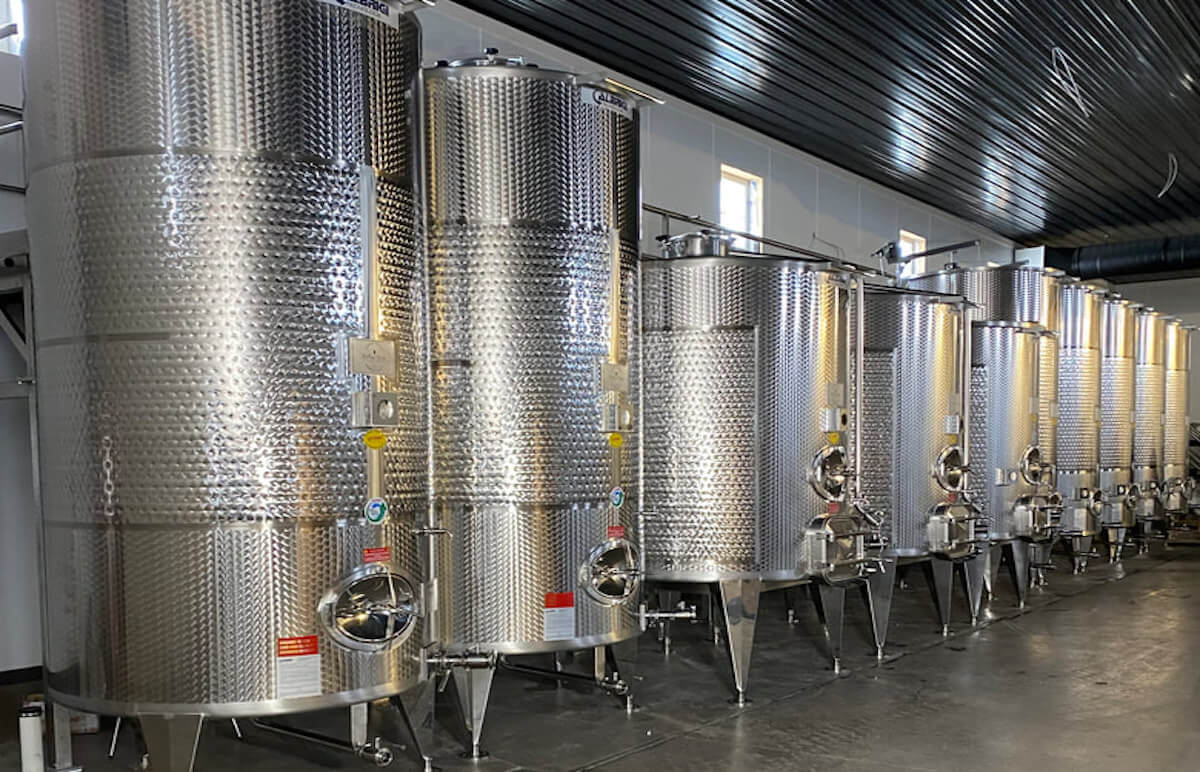
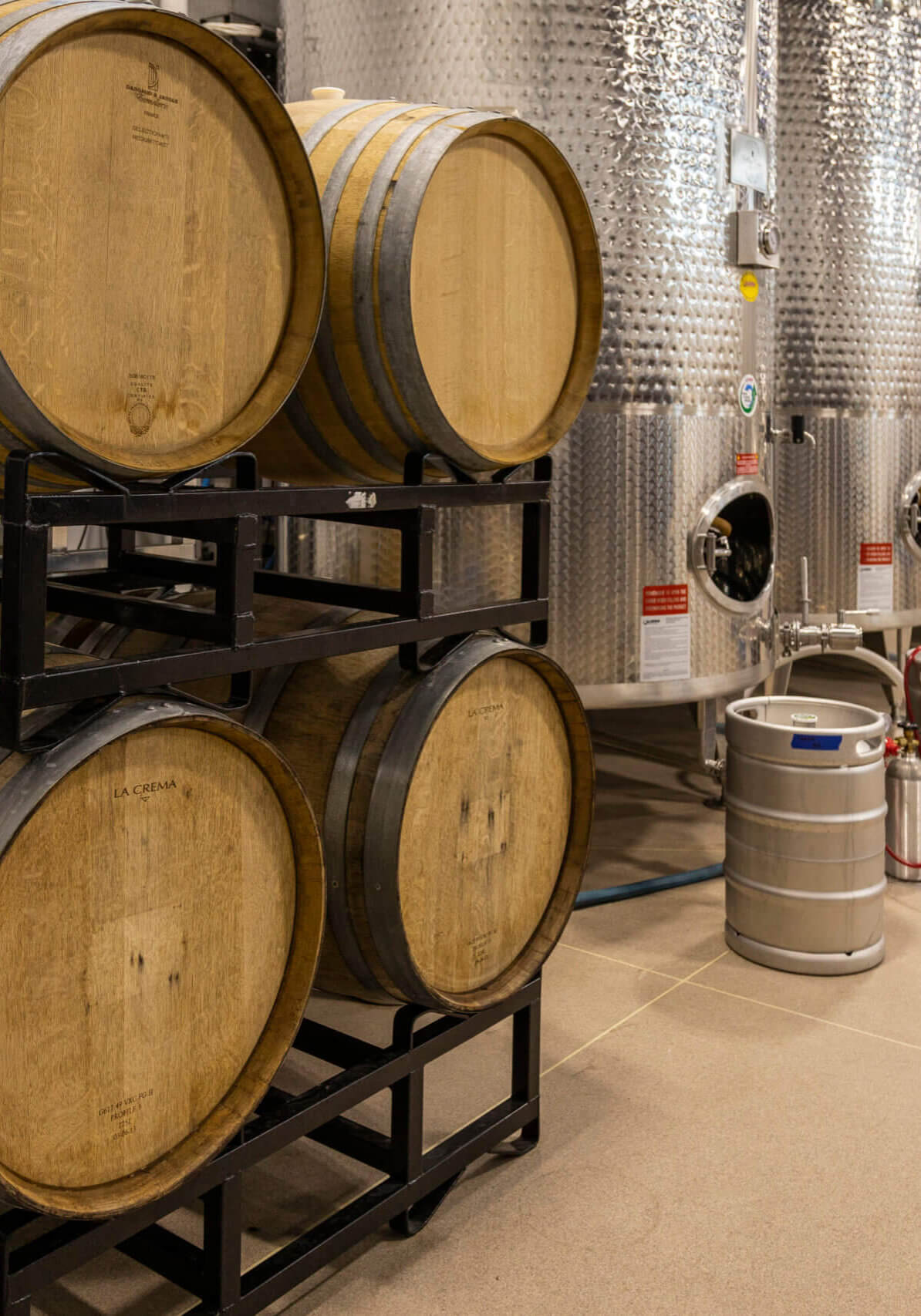
Our Tank sizes are 6000 liters; A full tank = 8,000 bottles; Our Barrels are 225 liters; One barrel = 300 bottles
Crush
In wine making, "crush" refers to the process of breaking open the grape skins to release the juice and pulp, which is essential for fermentation. This step typically follows harvesting and can be done manually or with machinery. The crushed grapes, often called "must," include juice, skins, seeds, and sometimes stems. This mixture is then fermented to produce the wine, with red wines typically fermenting with the skins to extract color and tannins. Our facility allows us to start the juicing process within 30 minutes of harvesting the grapes.
Wine Making Equipment
In this production facility you'll find large stainless steel fermentation tanks where the grape juice is transformed into wine. The oak barrels are used for aging wine, imparting unique flavors and aromas. The subtle interplay between the wine and the wood creates a symphony of taste that is both rich and nuanced. Center stage in the room is our Europress which gently crushes the grapes, ensuring that the juice is extracted with minimal bitterness from the seeds. This advanced piece of equipment allows us to maintain the integrity and quality of the grape juice, setting the foundation for exceptional wine. You might notice our plate filtration system which meticulously removes any impurities, ensuring a crystal-clear final product along side our steam generator used for sterilization and cleaning. You’ll find our crusher and de-stemmer at the south end which are essential for separating the grapes from their stems and crushing them to release the juice.
The Process
White Grapes/Wine
Grapes are initially dumped into an auger and transported by an elevator to the crusher-destemmer, where they are broken up and their stems removed. The grape mixture is then pumped into a press, where a gentle three-hour cycle extracts all of the juice. This juice is transferred to a tank and allowed to sit for two days, during which any large particles settle out. After settling, the juice is racked off the sediment and moved to another tank, where yeast is added to initiate the fermentation process.
Fermentation for white wines can take anywhere from three to twelve weeks, depending on the desired wine style. During fermentation, yeast metabolizes the sugar in the juice, producing carbon dioxide and alcohol; specifically, ten pounds of sugar will yield about six pounds of alcohol. To ensure shelf stability and reduce the formation of wine diamonds, the wines undergo a process called cold stabilization.
If the winemakers decide that the wine needs additional sweetness, sugar is added before the bottling stage.
Red Grapes/Wine
The winemaking process begins again with grapes being dumped into an auger and transported by an elevator up to the crusher-destemmer. Here, the grapes are broken up, and the stems are removed before being pumped into a tank. Yeast is then added to the mixture of grapes and juice to initiate the fermentation process. For red wines, the fermentation period can last from 5 to 14 days, depending on the desired wine style. During this time, whole grapes are left in the mixture to extract color from the grape skins.
After the fermentation is complete, the grapes undergo a gentle 3-hour pressing cycle to extract all the juice, which has now turned into wine. This wine is then transferred to a tank to mature for 30 days before being racked into a new tank. To ensure shelf stability and prevent the formation of wine diamonds after leaving the tasting room, the wines undergo a cold stabilization process.
Maturation
Our vintners carefully oversee the wine making process, ensuring high-quality standards. Maturation involves aging in barrels or tanks to develop flavors and character. The Laboratory uses equipment like hydrometers and pH meters to monitor chemical properties and changes. CLICK HERE to read more about the role barrels play in the aging process.
Finally, the wines go through a filtering process to make sure they are ready for bottling. This thorough process ensures that the wine is of the highest quality when it reaches consumers, preserving its flavor and clarity.
Closures
Screw caps are often considered superior to corks in numerous ways. They are recyclable, sustainable, and have a remarkably low failure rate, with less than 1 out of 50,000 bottles experiencing issues. Screw caps are especially effective with white wines, as they help preserve freshness without the need for a corkscrew. High-end wineries in New Zealand, including those producing $300-400 bottles of wine, have transitioned entirely to screw caps. In contrast, corks must be harvested and shipped from across the ocean, and they have a higher failure rate of 1 out of 40-50 bottles, often leading to cork taint.
Find Our Wines
Retail Locations
We have partnered with many retailers to make our wines accessible when a visit to our tasting room isn’t an option. Find one near you.